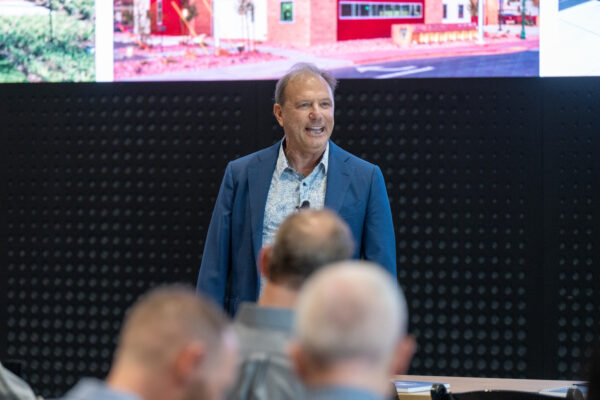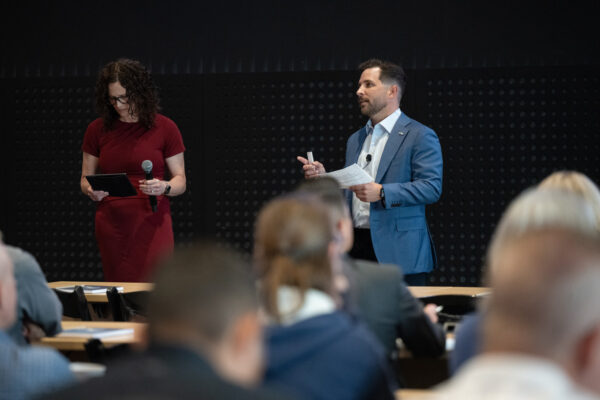
On May 16, CORE Construction welcomed industry professionals, civic leaders, and first responders from across the country to its headquarters in Frisco, Texas, for the 2025 CleanPSB Symposium—a day of focused discussion on how design and construction can reduce occupational hazards for fire and police personnel.
The event, hosted by CORE’s Clean Public Safety Building (CleanPSB) initiative, brought together attendees from eight states, offering a collaborative platform to explore how intentional design and construction can promote physical health, emotional resilience, and operational efficiency for First Responders.
“Today is our opportunity to serve back to these men and women,” said CORE CEO Jim Jacobs during his opening remarks. “First Responders are our greatest community leaders. It takes incredible leadership to run into a house fire, to stop a crime, to respond to an accident with only one mission in mind: to save lives. Leading is serving, and these are America’s greatest leaders.”
CleanPSB, a company-wide standard at CORE, was launched in 2017 to address the growing health and safety concerns faced by First Responders. From cancer risks to mental health challenges, the program aims to mitigate hazards through improved facility design and construction; focusing on recovery spaces, decontamination zones, fitness areas, and more.
“We get together once a year with professionals in public safety to talk about how we can design and construct these buildings to help minimize physical exposure risks and maximize mental health and wellness,” said Nichole Kotsur, CORE’s Civic National Vice President and founder of CleanPSB. “This isn’t just about budgets and durability, it’s about fostering a healthier way of life for our First Responders.”
The symposium featured expert-led presentations and breakout sessions tailored to fire and police professionals, with topics ranging from cancer prevention and suicide resiliency training to architectural strategies that foster community, recovery, and wellness.
“We’ll look at everything from the use of nonporous building materials and natural lighting to memorial walls and murals that build camaraderie,” Kotsur added. “Every detail in a facility can make a difference.”
With recorded sessions made available online, the symposium ensured long-term access to its insights, extending its reach beyond the day’s in-person and virtual attendees. As Kotsur noted, “If someone first hears about CleanPSB during a project interview, we’ve missed the mark. We want to be educating and collaborating long before that point.”